+86 13819274352
Leave Your Message
-
Contact WhatsApp
-
 Contact Phone
-
 Contact Email
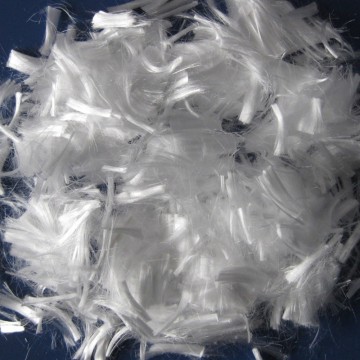
The global automotive industry is undergoing an unprecedented transformation driven by the twin imperatives of environmental sustainability and structural lightweighting. As manufacturers strive to meet stringent carbon emission standards and extend the range of electric vehicles (EVs), the search for next-generation materials has intensified. Among the most promising innovations is the application of Cellulose A Fiber for automotive parts and chassis sheet metal stamping.
Historically associated with paper and textile production, cellulose has emerged as a high-performance bio-reinforcement agent. When engineered into advanced composites or combined with metal stamping technologies, Cellulose A Fiber offers a unique combination of low density, high specific strength, exceptional vibration damping, and a neutral carbon footprint. This comprehensive analysis explores the industrial status, deep application scenarios, commercial trends, and manufacturing synergies of this revolutionary material.
Cellulose A Fiber provides a weight reduction of up to 30% compared to traditional glass fiber reinforcements, while significantly lowering the carbon footprint of structural automotive components. Its integration into metal-plastic hybrid (MPH) structures marks a new era in chassis design.
Cellulose is the most abundant natural polymer on Earth, consisting of linear chains of β-1,4-linked D-glucose units. "Cellulose A Fiber" refers to a highly purified, crystalline grade of cellulose optimized specifically for engineering applications. Through advanced chemical extraction and mechanical processing, the amorphous regions of the cellulose structure are minimized, leaving highly aligned crystalline domains.
This molecular configuration imparts several key mechanical characteristics:
The integration of Cellulose A Fiber into chassis sheet metal stamping represents a major technological leap. Traditionally, chassis parts—such as subframes, control arms, and shock towers—are stamped from high-strength steel or aluminum to ensure crashworthiness and structural rigidity. However, metal-only components are heavy and prone to transmitting road vibrations into the passenger cabin.
To address these challenges, automotive engineers are adopting Metal-Plastic Hybrid (MPH) technology. In this process, a sheet metal base is stamped into the desired shape using precision hydraulic presses or CNC press brakes. Subsequently, a Cellulose A Fiber-reinforced thermoplastic composite is overmolded onto the stamped metal substrate. The cellulose composite forms structural ribs, bosses, and reinforcement channels that bond mechanically and chemically with the metal.
This hybrid approach yields several critical benefits:
Chassis subframes are subjected to severe dynamic loads, fatigue, and environmental exposure. By utilizing Cellulose A Fiber-reinforced hybrids, manufacturers can design subframes that exhibit superior fatigue resistance. The natural damping properties of cellulose fibers absorb high-frequency road vibrations, resulting in a quieter, smoother ride (improved Noise, Vibration, and Harshness - NVH characteristics).
Electric vehicles require robust, lightweight enclosures to protect battery packs from road debris and thermal runaway events. Cellulose A Fiber composites, when combined with stamped aluminum sheets, provide excellent impact resistance and thermal insulation. The low thermal conductivity of cellulose helps maintain optimal battery operating temperatures, enhancing cell efficiency and longevity.
A-pillars, B-pillars, and roof rails are critical for cabin integrity during rollover accidents. Stamping these components from ultra-high-strength steel (UHSS) and reinforcing them internally with Cellulose A Fiber composites allows for thinner metal profiles. This improves driver visibility and lowers the vehicle's center of gravity while maintaining strict roof-crush safety ratings.
For every 100 kg saved in EV structural weight, the driving range increases by approximately 6-8%. Cellulose A Fiber is rapidly becoming the preferred eco-friendly choice for non-structural and semi-structural EV components globally.
The commercial market for cellulose-reinforced automotive components is experiencing exponential growth. Valued at approximately USD 250 million in 2023, the global market for automotive cellulose composites is projected to reach USD 750 million by 2030, growing at a CAGR of over 15%. This surge is driven by regulatory pressure in Europe, North America, and China to reduce lifecycle carbon emissions (Scope 3 emissions).
Tier-1 automotive suppliers and OEMs (Original Equipment Manufacturers) are actively partnering with agricultural processors and chemical companies to secure stable supplies of high-grade cellulose fibers. Furthermore, the cost of Cellulose A Fiber is highly competitive compared to carbon fiber, making it a viable solution for mass-market vehicle platforms, rather than just premium luxury models.
Looking ahead, several key trends will shape the future of Cellulose A Fiber in the automotive sector:







From press brakes and shearing machines to fiber laser cutters, plate rolling machines and hydraulic presses, VIKEN designs equipment around your material, thickness, working length, accuracy and production volume. Our engineers recommend the right machine configuration, controller, tooling and automation options to help you achieve stable quality, higher efficiency and lower operating costs.
Integrating advanced automation, robotics, and smart control systems to connect your metal stamping and forming processes, enhancing throughput and reducing manual labor in complex automotive parts production lines.
We provide global technical support, regular maintenance, rapid spare parts delivery, and operator training to ensure your sheet metal processing machinery operates at peak efficiency with minimal downtime.