Explore our premium grade products designed to protect concrete floor joints, control shrinkage, and enhance slab durability under heavy industrial loads in Canada.
Canada's industrial landscape is experiencing a massive transformation. Driven by the rapid growth of e-commerce, cold chain logistics, and high-tech manufacturing, modern warehouses are expanding rapidly across major logistical hubs such as the Greater Toronto Area (GTA), Metro Vancouver, Calgary's logistics parks, and Montreal's industrial corridors. Inside these massive facilities, concrete floors serve as the critical foundation. However, the integrity of these floors is constantly threatened by heavy-duty traffic, temperature fluctuations, and structural loads. This is where high-quality concrete floor joint fillers and armoured joint systems become indispensable.
In Canada, concrete floors are subjected to unique and harsh operational environments. Industrial facilities operate 24/7 with heavy forklifts, reach trucks, and Automated Guided Vehicles (AGVs) carrying heavy payloads. These vehicles run on hard polyurethane wheels, which exert extreme localized pressure on the floor's construction and contraction joints. Without proper joint filling and edge protection, the concrete at the joint edges will inevitably break down, leading to joint spalling. This not only damages the facility's equipment and slows down operations but also presents a major safety hazard for workers.
One of the most significant challenges in Canadian construction is the climate. With winter temperatures dropping to -40°C in provinces like Alberta, Saskatchewan, and Manitoba, and summer temperatures reaching over +30°C in Ontario and Quebec, concrete slabs undergo substantial thermal expansion and contraction. During the winter, the concrete slabs shrink, causing the joints to open up significantly.
A standard joint filler cannot cope with this extreme movement. If the filler is too rigid, it will tear cohesively or adhesively from the joint walls. If it is too soft, it will fail to support the joint edges under wheel traffic. As a leading China concrete floor joint filler exporter, our products are specifically formulated to maintain flexibility and elasticity at low temperatures, ensuring they remain bonded to the joint walls while providing the necessary load-bearing capacity to prevent edge spalling.
Our concrete joint fillers are tested to withstand extreme Canadian winter conditions, remaining flexible down to -30°C to -40°C without cracking, peeling, or losing adhesion to the concrete slab walls.

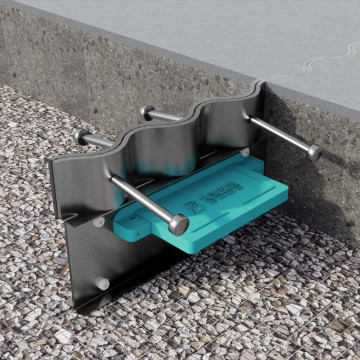
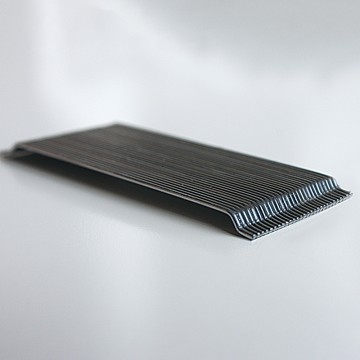
The shift toward automation in Canadian warehouses has redefined the standards for concrete floor performance. Automated Guided Vehicles (AGVs) and Autonomous Mobile Robots (AMRs) operate on precise paths and require exceptionally flat, smooth floors to navigate efficiently. Any joint deterioration, spalling, or unevenness can cause these high-tech systems to lose calibration, suffer wheel wear, or stop altogether. Therefore, protecting joints with armored systems like the Sinus Type Heavy Load Concrete Armoured Joint and sealing them with high-performance fillers is no longer optional—it is a critical requirement for warehouse operational efficiency.
Our armored joints and seamless joint fillers guarantee a flat, impact-free transition for automated robotic systems, protecting sensitive sensors and wheels from vibration damage.
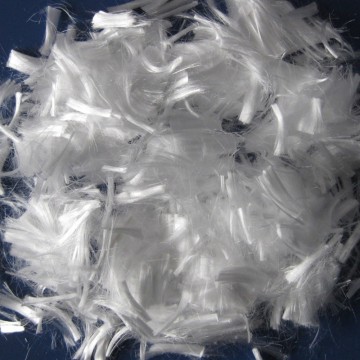
Sustainability is at the forefront of Canadian construction. Developers are actively seeking materials that contribute to LEED (Leadership in Energy and Environmental Design) certification. Our concrete fibers, including the Alkali Resistant Cellulose Fiber and PP Macro Synthetic Fiber, allow for reduced steel reinforcement usage and thinner concrete slabs, minimizing the carbon footprint of concrete production.
Additionally, our concrete joint fillers are formulated with low VOC (Volatile Organic Compounds) profiles, ensuring compliance with strict Canadian environmental regulations and indoor air quality standards. By selecting our products, Canadian developers can achieve both superior structural performance and environmental compliance.
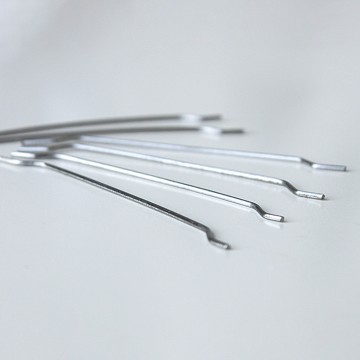
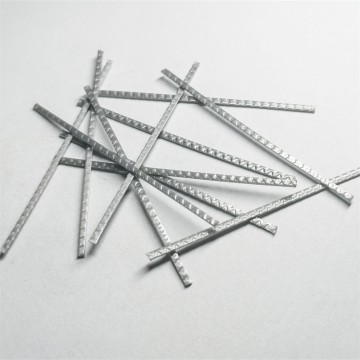
Joint fillers work best when the joints themselves are stable. Excessive concrete shrinkage increases the joint width, making it harder for any filler to bridge the gap and support loads. By incorporating advanced concrete fibers, such as Loose Hooked End Steel Fiber or PP Macro Synthetic Fiber, contractors can control plastic and drying shrinkage cracking. The fibers distribute internal stresses uniformly throughout the concrete slab, keeping the joints tight and minimizing joint opening widths. This synergy between fiber reinforcement and joint filling creates a highly durable, maintenance-free industrial floor.
Sourcing concrete floor joint fillers and armoured joints from a specialized Chinese manufacturer offers Canadian contractors a unique combination of cost efficiency, high quality, and manufacturing scale. Our production facilities utilize advanced European technologies and strict quality control protocols to ensure every batch of joint filler and every linear meter of armored joint meets or exceeds international standards, including ASTM and CSA (Canadian Standards Association) requirements.
We understand the logistical complexities of exporting to Canada. Whether shipping to the Port of Vancouver, the Port of Montreal, or inland rail hubs in Toronto and Calgary, we ensure secure packaging, complete customs documentation, and reliable shipping schedules. Our technical support team works closely with Canadian engineers and floor applicators to provide detailed guidance on installation, product selection, and site preparation.
We provide full-service export logistics to major Canadian cities, offering reliable delivery schedules, customs clearance support, and robust packaging to prevent transit damage.
To ensure maximum performance and longevity of concrete floor joint fillers in Canadian warehouses, correct installation protocols must be followed. Concrete floor joints must be allowed to cure and shrink as much as possible before the joint filler is applied. In typical Canadian construction schedules, filling joints is recommended at least 28 days post-pour, though 90 days or longer is preferred to allow the maximum amount of slab shrinkage to occur.
Regular floor maintenance is essential for large-scale logistics centers in cities like Toronto, Vancouver, and Montreal. Over time, heavy forklift traffic can cause minor wear even to the most durable joints. Regular inspection of the joint filler is recommended. If the filler becomes damaged or worn, it should be spot-repaired immediately to prevent dust accumulation and edge spalling.
By combining our high-strength armoured joints with flexible joint fillers and fiber-reinforced concrete slabs, Canadian facility managers can reduce long-term maintenance costs by up to 70%, extending the lifespan of both the floor and the material handling equipment.
Browse our complete range of structural fibers and heavy-duty armoured joints exported globally to Canada and other international markets.