+86 13819274352
Leave Your Message
-
Contact WhatsApp
-
 Contact Phone
-
 Contact Email
High-performance armored joints and fiber reinforcements optimized for shipbuilding and heavy steel shearing environments.
Shipbuilding is one of the most demanding heavy industries in the world. The fabrication process begins with structural steel plates—massive sheets of high-strength carbon steel that must be stored, transported, sheared, and cut to precise dimensions. The facilities housing these operations, particularly the shearing and laser cutting bays, are subjected to some of the most punishing mechanical loads imaginable. In these environments, the structural integrity of the concrete floor is not merely a matter of building maintenance; it is a critical variable in operational efficiency, machine calibration, and workplace safety.
Historically, floor joints in industrial workshops were treated as secondary details, often filled with basic elastomeric sealants or left exposed. However, the rise of automated CNC shearing machines, high-power fiber laser cutters, and heavy-duty gantry systems has redefined flooring performance requirements. Unprotected joints under heavy forklift traffic (transporting steel plates weighing up to 20 tons) quickly break down, leading to edge spalling, structural cracking, and eventual sub-base failure. Modern shipyards now recognize that investing in robust concrete floor joint fillers and armoured joint systems is essential to prevent costly operational downtime.
CHNVIKEN is a professional manufacturer specializing in the research, development, production, and export of sheet metal processing equipment. With more than 10 years of industry experience, we have grown from a local machinery supplier into a globally recognized brand serving customers in over 100 countries and regions.
Our product portfolio includes CNC Press Brakes, Hydraulic Shearing Machines, Fiber Laser Cutting Machines, Hydraulic Presses, Punching Machines, Ironworkers, Roll Bending Machines, and complete Duct Production Lines. We are committed to providing efficient, intelligent, and cost-effective solutions for sheet metal fabrication industries worldwide.
At CHNVIKEN, we understand that heavy machinery like CNC Press Brakes and Hydraulic Shearing Machines requires an absolutely stable foundation. Vibrations caused by shearing plates can propagate through the floor, affecting the precision of adjacent laser cutters and bending machines. By integrating advanced concrete joint fillers and armored joints into the shop floor design, fabricators can ensure their high-precision machinery operates without interference from structural floor shifts or vibration transfer.
In a shipbuilding steel plate processing facility, the concrete slab is subjected to three distinct types of mechanical stress: high-amplitude impact, continuous vibration, and extreme static load transfer. Each of these forces acts directly on the concrete joints, making the choice of joint filler and reinforcement critical.
Hydraulic shearing machines, such as those manufactured by CHNVIKEN, exert massive forces to cut structural steel plates. When the shear blade strikes the plate, a high-energy shockwave is transmitted through the machine frame into the concrete foundation. If the expansion and construction joints surrounding the machine foundation are not correctly filled with a high-durometer, semi-rigid joint filler, the concrete edges will micro-fracture. Over time, these micro-fractures propagate, causing the concrete edge to break away (spall). A semi-rigid joint filler supports the joint edges under this impact, absorbing shock and distributing load evenly.
Fiber laser cutting machines require extreme precision to cut complex profiles for ship hulls and bulkheads. Even minor floor vibrations can cause laser head misalignment, resulting in rejected parts and wasted material. In shipyards where shearing and laser cutting occur in the same bay, structural isolation is mandatory. Armoured joints combined with specialized elastomeric joint fillers act as vibration dampeners, decoupling the violent movements of shearing machines from the sensitive optics of laser cutters.
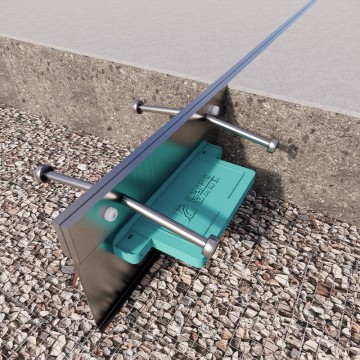
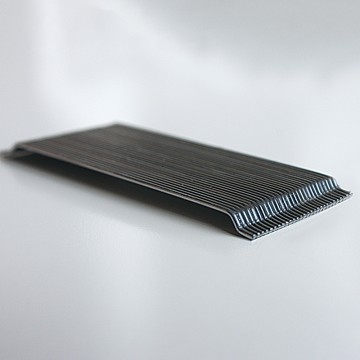
Steel plates are transported through the facility on heavy forklifts, multi-directional transporters, or overhead cranes. When a forklift carrying a 15-ton steel plate crosses an unfilled or poorly filled joint, the weight shifts abruptly from one concrete slab to the next. This causes vertical deflection, leading to slab rocking and eventual cracking. Armoured joints, such as the Economic Straight Type, utilize steel plate dowels to mechanically transfer loads across the joint, preventing vertical movement and ensuring a smooth transition for material handling equipment.
Discover CHNVIKEN's high-performance sheet metal processing equipment designed for shipbuilding and heavy industrial applications.

High-precision bending solutions optimized for heavy structural steel plates used in marine construction.

Ultra-fast and precise cutting systems designed to handle complex profiles on thick steel plates.

Heavy-duty shearing equipment built to cut large-format structural steel plates with minimal distortion.
The industrial flooring market is undergoing a significant technological shift. As shipyards adopt automated guided vehicles (AGVs) and autonomous mobile robots (AMRs) for steel plate transit, floor tolerances have become much tighter. AGVs rely on optical or magnetic guidance systems that require an absolutely flat, seamless surface. Any joint failure, spalling, or uneven slab deflection can disrupt the sensor arrays, halting the automated production line.
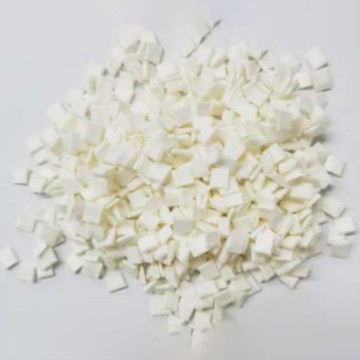
Consequently, there is a rapidly growing demand for polyurea-based joint fillers. Unlike traditional epoxy fillers, polyurea cures within hours, allowing shipyards to perform floor maintenance over a single weekend shift without interrupting production. Furthermore, polyurea maintains its flexibility at lower temperatures, which is critical for shipyards located in cold northern climates where steel fabrication halls are difficult to heat consistently.
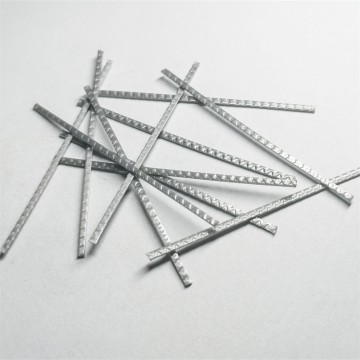
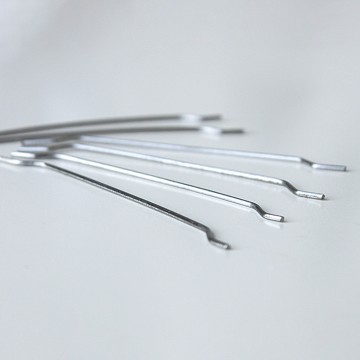
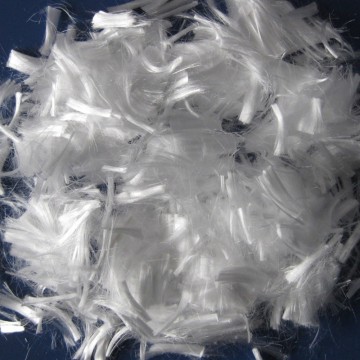
To complement joint fillers, modern shipyard floors are increasingly reinforced with synthetic and steel fibers. By incorporating products like PP Macro Synthetic Fiber and Hooked End Steel Fiber into the concrete mix, engineers can reduce the overall number of saw-cut joints needed in the facility. Fiber reinforcement controls plastic shrinkage cracking and improves the post-crack load capacity of the concrete, ensuring that when joint fillers are applied, they bond to a stable, non-crumbling concrete matrix.
From individual machinery to fully integrated, automated production lines, we tailor our solutions to your specific operational needs.
From press brakes and shearing machines to fiber laser cutters, plate rolling machines and hydraulic presses, VIKEN designs equipment around your material, thickness, working length, accuracy and production volume. Our engineers recommend the right machine configuration, controller, tooling and automation options to help you achieve stable quality, higher efficiency and lower operating costs.

Optimizing individual shearing and bending stations for maximum output and safety.

Upgrading from manual processing to fully automated, networked fabrication environments.

Providing comprehensive maintenance, parts, and engineering support worldwide.
For shipyard operators, the initial cost of installing high-grade concrete floor joint fillers and armoured joints is often a small fraction of the total facility budget. However, the long-term return on investment (ROI) is substantial. Consider the direct and indirect costs associated with a joint failure in a steel plate shearing bay:
By implementing a proactive flooring design that utilizes armored joints at construction boundaries and high-durability polyurea fillers in saw-cut control joints, shipyards can achieve a virtually maintenance-free floor for over a decade. This ensures continuous, predictable production flows, allowing builders to meet tight vessel delivery deadlines.
Explore our complete catalog of concrete reinforcement fibers and armored joint systems engineered for heavy industrial applications.