+86 13819274352
Leave Your Message
-
Contact WhatsApp
-
 Contact Phone
-
 Contact Email
In the high-intensity environment of automotive manufacturing, the industrial floor is the foundation of all production processes. Specifically, in facilities dedicated to automotive parts production and chassis sheet metal stamping, the concrete floor slab must withstand some of the most severe mechanical forces found in modern industry. Heavy stamping presses, which exert thousands of tons of force, create continuous low-frequency vibrations that travel through the ground. At the same time, heavy forklifts, Automated Guided Vehicles (AGVs), and material handling systems transport massive steel and aluminum coils weighing up to 25 metric tons across the facility.
Under these extreme operating conditions, traditional concrete floor joints are often the first point of failure. Without specialized Floor Control Joints For Automotive Parts And Chassis Sheet Metal Stamping, the edges of concrete slabs quickly spall, crack, and break down. This structural degradation leads to increased maintenance costs, vehicle damage, and unplanned downtime that can cost automotive manufacturers thousands of dollars per minute. Implementing advanced armoured joint systems, such as sinus-type or straight-type steel armoured joints, is essential to protect the structural integrity of the factory floor, ensure the smooth operation of automated logistics, and maintain the precise calibration of sheet metal processing machinery.
Standard saw-cut or unarmoured expansion joints lack the edge reinforcement required to handle heavy dynamic loads. When a heavy wheel passes over an unprotected joint, the load is transferred abruptly from one slab to the next, causing micro-impacts that chip away the concrete edges (spalling). Over time, this spalling creates deep ruts that disrupt production flow.
Automotive chassis components, such as frame rails, subframes, and suspension arms, are manufactured using heavy-duty sheet metal stamping processes. The production line typically starts with automated decoilers feeding high-strength steel sheets into progressive or transfer press lines. The dynamic loads generated during this process are immense. The sheer weight of the stamping dies, combined with the impact force of the press, creates continuous stress waves within the concrete floor.
Furthermore, the internal logistics of a chassis plant require constant movement of raw materials and finished parts. Forklifts carrying heavy steel coils and AGVs moving racks of stamped chassis parts place high point-loads on the floor. When these vehicles cross floor joints, the impact is transferred through the wheels. If the joints are not perfectly flat and reinforced, the concrete edges will spall. This not only damages the floor but also accelerates the wear and tear on vehicle tires, bearings, and suspension systems, leading to higher maintenance costs for the plant's logistics fleet.
To address the severe conditions of automotive stamping facilities, industrial flooring engineers rely on heavy-duty armoured joint systems. These systems reinforce the slab edges with steel profiles and distribute dynamic loads evenly across adjacent slabs using high-capacity dowel plates.
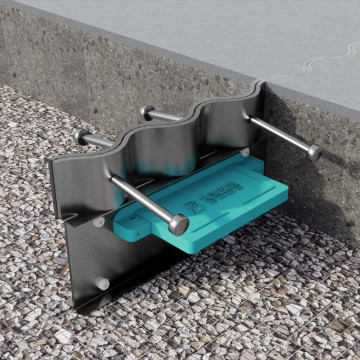
The Sinus Type Heavy Load Concrete Armoured Joint represents the pinnacle of industrial floor joint design. Featuring a corrugated, wave-like steel profile at the surface, the sinus joint ensures that a passing wheel is always in contact with both concrete slabs simultaneously. As a result, there is no physical gap for the wheel to drop into, eliminating impact noise and vibration. This "impact-free" transition is particularly critical for automated guided vehicles (AGVs) carrying sensitive electronic components or heavy chassis assemblies, as it prevents sensor errors and extends the lifespan of the vehicle's drive systems.
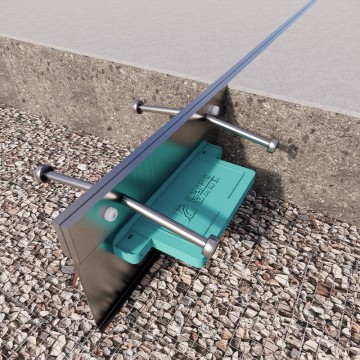
The Straight Type Heavy Load Concrete Armoured Joint utilizes two solid steel plates to protect the concrete edges from direct wheel impact. This system is highly effective for areas subjected to heavy static loads and linear traffic. For secondary traffic zones and warehouses, the Economic Straight Type Concrete Floor Armoured Joint provides a cost-effective alternative while still offering robust protection against joint spalling and slab deflection.
The global automotive industry is undergoing a massive shift toward Electric Vehicles (EVs). EV chassis designs, often referred to as "skateboard platforms," incorporate large-format battery enclosures and integrated structural parts that require larger, heavier sheet metal components. Consequently, stamping plants are installing larger presses with higher tonnages, which in turn increases the load-bearing requirements of the factory floor.
In addition to heavier loads, modern automotive plants are embracing Industry 4.0 automation. AGVs and Autonomous Mobile Robots (AMRs) have become the standard for material transport. These automated systems require extremely flat, seamless floors to operate efficiently. Even minor joint spalling or height differentials across a joint can trigger safety sensors, causing the AGV to halt and disrupt the entire production sequence. Installing high-performance floor control joints is no longer just about protecting the concrete; it is a critical requirement for enabling advanced automation and maximizing throughput in smart factories.
Unplanned downtime in an automotive assembly line can cost upwards of $20,000 per minute. By investing in premium armoured floor joints during the construction or renovation phase, facility owners can eliminate joint maintenance downtime for the entire lifecycle of the building, delivering a massive return on investment (ROI).
The performance of sheet metal processing equipment is directly linked to the stability of the foundation. High-precision machinery, such as CNC press brakes and fiber laser cutting systems, requires a stable, vibration-free floor to maintain tight manufacturing tolerances. If the surrounding floor slabs shift or tilt due to joint failure, it can affect the alignment and calibration of these sensitive machines.
For example, a fiber laser cutter operating with micron-level precision can experience beam misalignment or cutting defects if the floor vibrates excessively or undergoes differential settlement. By utilizing heavy-duty armoured joints, facility owners can isolate vibrations and ensure that the concrete slabs supporting high-precision machinery remain perfectly level and stable over decades of operation. This synergy between robust floor infrastructure and state-of-the-art machinery is key to achieving consistent quality in automotive chassis stamping.
CHNVIKEN is a professional manufacturer specializing in the research, development, production, and export of sheet metal processing equipment. With more than 10 years of industry experience, we have grown from a local machinery supplier into a globally recognized brand serving customers in over 100 countries and regions.
Our product portfolio includes CNC Press Brakes, Hydraulic Shearing Machines, Fiber Laser Cutting Machines, Hydraulic Presses, Punching Machines, Ironworkers, Roll Bending Machines, and complete Duct Production Lines. We are committed to providing efficient, intelligent, and cost-effective solutions for sheet metal fabrication industries worldwide.