
 +86 13819274352
Leave Your Message
-
Contact WhatsApp
-
 Contact Phone
-
 Contact Email
Harnessing advanced crystalline fiber systems and high-precision forming machinery for automotive manufacturing
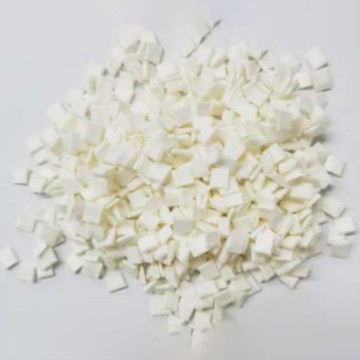
High-performance structural fiber designed to optimize tensile properties in complex matrices.

High-precision bending machinery engineered for complex geometries and advanced sheet metal profiles.

Ultra-fast, high-accuracy fiber lasers designed to cut high-strength automotive structural sheets.

Heavy-duty shearing equipment ensuring clean, burr-free cuts for subsequent stamping operations.
The global automotive industry is undergoing a monumental transformation, driven by two primary forces: the urgent need for vehicle lightweighting to improve fuel efficiency (or extend electric vehicle range) and the demanding shift toward sustainable, bio-based materials. In this pursuit, Nano Crystalline Cellulose (NCC) has emerged as a revolutionary bio-nanomaterial. Derived from wood pulp, agricultural waste, or specialized bacterial synthesis, NCC consists of highly ordered, crystalline rod-like nanoparticles. These nanoparticles exhibit mechanical properties that rival high-performance synthetic materials, boasting a tensile strength of up to 7.5 GPa and a Young's modulus of approximately 110–150 GPa, all while maintaining a remarkably low density of around 1.6 g/cm³.
When integrated into automotive parts and chassis sheet metal stamping processes, NCC acts as a structural reinforcement agent, a tribological modifier, and a key component in hybrid metal-composite laminates. The synergy between high-precision metal stamping machinery and nanostructured materials opens up new pathways for manufacturing structural components that are not only lighter but also stronger and more environmentally friendly.
Key Industry Fact: Replacing conventional steel components with NCC-reinforced hybrid metal laminates can reduce chassis-related component weight by up to 25-35% without compromising crashworthiness or structural integrity.
To understand the application of Nano Crystalline Cellulose in chassis stamping, it is essential to examine its physical characteristics. The high aspect ratio (typically 5–20 nm in width and 100–500 nm in length) and abundant surface hydroxyl groups make NCC an exceptional reinforcing filler. In polymer composites used alongside sheet metal, NCC coordinates to form rigid, percolating networks that distribute mechanical stress efficiently. Furthermore, when used in specialized water-based stamping lubricants, these nanoparticles align under shear stress to create a protective, nano-scale boundary layer, drastically reducing tool-wear and friction during high-pressure metal forming operations.
Chassis sheet metal stamping is one of the most demanding processes in automotive manufacturing. Components such as subframes, crossmembers, control arms, and shock towers must withstand extreme cyclic loading, fatigue, and environmental exposure. Traditionally, these parts are stamped from High-Strength Low-Alloy (HSLA) steels or Advanced High-Strength Steels (AHSS). However, stamping these materials introduces significant challenges, including rapid die wear, springback, and high energy consumption.
Integrating Nano Crystalline Cellulose into this workflow occurs through three main avenues:
| Material System | Tensile Strength (MPa) | Young's Modulus (GPa) | Weight Reduction Potential | Primary Stamping Challenge |
|---|---|---|---|---|
| Standard HSLA Steel | 340 - 550 | 210 | Baseline (0%) | Springback & Die Wear |
| Aluminum-NCC Sandwich Laminate | 280 - 420 | 85 - 115 | 30% - 40% | Delamination at sharp bends |
| NCC-Reinforced Polymer Composite | 120 - 210 | 25 - 45 | 50% - 60% | Anisotropic shrinkage & flow control |
| AHSS with NCC Bio-Lubricant | 600 - 980 | 200 | 10% - 15% (via down-gauging) | High forming tonnage required |
Currently, the commercialization of Nano Crystalline Cellulose in the automotive sector is transitioning from laboratory-scale pilot programs to medium-volume production runs. Major automotive OEMs and Tier-1 suppliers are actively collaborating with nanocellulose producers to standardize material specifications. The primary commercial driver is the strict regulatory pressure on CO2 emissions, which mandates lightweighting across both internal combustion engine (ICE) vehicles and electric vehicles (EVs). For EVs, weight reduction directly translates to increased battery range, making expensive lightweight materials commercially viable.
However, several industrial challenges remain to be fully resolved. The primary bottleneck is the cost-effective extraction and surface modification of NCC at an industrial scale. Untreated NCC is highly hydrophilic, which can lead to poor dispersion and moisture absorption when blended with hydrophobic polymers like polypropylene or polyurethane used in automotive panels. To overcome this, chemical manufacturers are developing surface-grafted NCC variants that bond seamlessly with polymer matrices, ensuring long-term durability and resistance to environmental moisture—a crucial requirement for under-the-hood and chassis applications.
On the machinery side, processing these advanced materials requires highly precise, controllable stamping and forming equipment. Standard mechanical presses often lack the precision stroke control needed to stamp delicate sandwich laminates or high-strength alloys lubricated with nano-emulsions. This is where advanced CNC Press Brakes, Hydraulic Shearing Machines, and specialized Hydraulic Stamping Presses become indispensable, providing the exact tonnage, dwell time, and speed curves required to optimize material flow without causing structural defects.
The application of NCC in automotive structures is not uniform; it is highly targeted to areas where its unique properties yield the maximum benefit. Let's analyze three critical application scenarios:
Electric vehicle battery packs require robust protection from road debris, punctures, and electromagnetic interference, all while needing to dissipate heat efficiently. Traditional steel shields are heavy, while pure aluminum shields can be costly and prone to tearing under severe impacts. An NCC-reinforced aluminum sandwich panel stamped on high-tonnage hydraulic presses offers an optimal solution. The nanocellulose core acts as an energy-absorbing barrier, dispersing the impact energy across the crystalline network and preventing penetration into the battery cells. Additionally, the thermal insulation properties of cellulose help maintain the battery pack within its optimal operating temperature range.
B-pillars and roof rails are critical for cabin integrity during rollover accidents. Stamping these parts from Ultra-High-Strength Steel (UHSS) requires massive force and results in high scrap rates due to cracking. By utilizing hybrid metal-NCC composites, manufacturers can stamp thinner steel profiles and reinforce them locally with NCC-epoxy structural patches. The resulting hybrid component maintains the required crash load paths while reducing the vehicle's upper structure weight, lowering the center of gravity and improving handling dynamics.
Chassis crossmembers undergo constant vibrational stress from road inputs. NCC's high internal friction at the nanoscale makes it an exceptional vibration-damping material. When used as an interlayer in stamped steel crossmembers, it dampens road noise, vibration, and harshness (NVH) before it reaches the passenger cabin. This eliminates the need for heavy, secondary rubber dampers, further contributing to overall vehicle weight reduction.
Looking ahead, the integration of Nano Crystalline Cellulose in automotive manufacturing is expected to accelerate, driven by several key technological trends:
1. Smart and Self-Healing Nanocellulose Coatings: Researchers are developing smart NCC coatings that can detect structural stress or micro-cracks in stamped metal parts. By embedding piezo-chromic molecules within the NCC matrix, the material changes color when subjected to excessive strain, allowing for rapid quality control during the stamping process and easier vehicle inspections during servicing.
2. Fully Bio-Based Vehicle Architectures: The ultimate goal for many forward-thinking OEMs is a fully circular vehicle. Combining NCC with bio-resins (such as PLA or bio-epoxies) and stamping them alongside recycled aluminum sheets will allow future vehicles to be easily shredded and separated at the end of their lifecycle, aligning perfectly with global circular economy goals.
3. AI-Driven Stamping and Material Modeling: As the material behavior of NCC-metal hybrids is highly complex and non-linear, AI and machine learning algorithms are being integrated into press controllers. These smart systems predict material flow, springback, and potential tearing in real-time, adjusting the press parameters dynamically during the stroke to ensure zero-defect manufacturing.
CHNVIKEN is a professional manufacturer specializing in the research, development, production, and export of sheet metal processing equipment. With more than 10 years of industry experience, we have grown from a local machinery supplier into a globally recognized brand serving customers in over 100 countries and regions.
Our product portfolio includes CNC Press Brakes, Hydraulic Shearing Machines, Fiber Laser Cutting Machines, Hydraulic Presses, Punching Machines, Ironworkers, Roll Bending Machines, and complete Duct Production Lines. We are committed to providing efficient, intelligent, and cost-effective solutions for sheet metal fabrication industries worldwide.
High-precision forming systems designed for advanced automotive sheet metal and composite stamping
From press brakes and shearing machines to fiber laser cutters, plate rolling machines and hydraulic presses, VIKEN designs equipment around your material, thickness, working length, accuracy and production volume. Our engineers recommend the right machine configuration, controller, tooling and automation options to help you achieve stable quality, higher efficiency and lower operating costs.
Transition your workshop into an industry-ready smart factory. Connect your laser cutters, shears, and bending units under a unified control system to optimize material throughput and track real-time performance.
Our global engineering network provides prompt installation, calibration, and maintenance services, ensuring your high-precision stamping lines operate with maximum uptime and efficiency.



Explore our full range of processing materials and high-precision fabrication systems
Reinforcement fibers for advanced composite matrices and structural components.
Multi-axis bending control for complex chassis sheet metal geometries.
High-speed cutting of high-strength structural sheets and composite blanks.
High-tonnage blanking shear ensuring clean edges for deep-draw stamping.
Integrated hydraulic press line designed for high-strength automotive frames.
Robotic integration with press brakes for continuous, high-volume production.
CNC-controlled laser cutting optimized for nesting and material yield.
Engineered for stamping complex hybrid laminate sheets and deep-draw parts.
