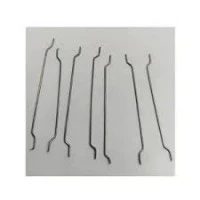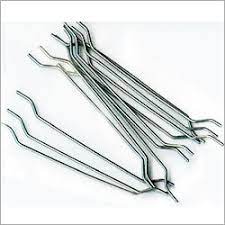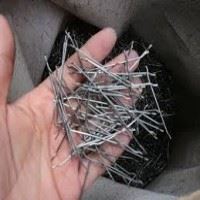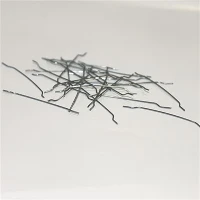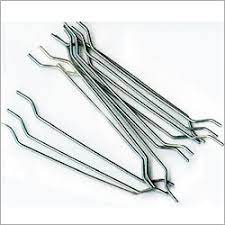
Metal Low Carbon Steel Fiber
Metal low-carbon steel fiber combines the advantages of low-carbon steel and metal fiber, with high strength, high toughness, good electrical and thermal conductivity and low manufacturing cost.

- Product Introduction
Metal low-carbon steel fiber combines the advantages of low-carbon steel and metal fiber, with high strength, high toughness, good electrical and thermal conductivity and low manufacturing cost. Its tensile strength is significantly improved compared with pure low-carbon steel, reaching 800-1000MPa, and the elongation can also be maintained at about 10%-15%.
From the manufacturing process point of view, common production methods are melt spinning and mechanical cutting. The melt spinning process can make the metal low-carbon steel fiber have a relatively uniform diameter and good fiber performance. It heats the low-carbon steel to a molten state and then extrude it through a special spinneret to form fibers; mechanical cutting is to cut the low-carbon steel raw material into fibers of a specific length and shape. This method is relatively simple, but it may result in slightly poor dimensional accuracy of the fiber. Different manufacturing processes have a significant impact on the performance of the fiber. For example, the fiber produced by melt spinning may be better in conductivity and toughness, while the fiber cut by machine may have more advantages in cost.
In terms of practical application, in a large bridge construction project, metal low-carbon steel fiber was added to concrete, which effectively improved the tensile strength and toughness of the concrete and enhanced the durability of the bridge structure. In the manufacture of heat dissipation components for electronic devices, metal low-carbon steel fibers are also used to enhance heat dissipation performance because their good thermal conductivity can quickly dissipate heat.
However, this material will also have a certain impact on the environment during production and use. During the production process, the melt spinning process consumes a lot of energy to heat the low-carbon steel to a molten state, and some exhaust gas emissions may be generated. The mechanical cutting process may produce metal waste, which requires reasonable waste disposal. In order to reduce environmental impact, energy-saving heating equipment can be used to improve energy utilization efficiency; for metal waste, it can be recycled and reused.
Compared with other materials, compared with high-carbon steel fibers, metal low-carbon steel fibers have slightly lower strength, but better toughness, lower cost, and relatively simple manufacturing process. Compared with glass fibers, metal low-carbon steel fibers have better electrical and thermal conductivity, but glass fibers have better corrosion resistance.
From the perspective of future development trends, with the advancement of technology, the manufacturing process of metal low-carbon steel fibers may be more efficient and environmentally friendly, such as developing new heating technologies to reduce the energy consumption of melt spinning. In terms of market demand, with the continuous development of industries such as construction and electronics, the demand for materials with high strength, good electrical and thermal conductivity and low cost will continue to increase, which provides broad market opportunities for metal low-carbon steel fibers. However, it also faces some challenges, such as the need to continuously improve product quality to meet higher industry standards and cope with competition from other new materials.


Hot Tags: metal low carbon steel fiber, China metal low carbon steel fiber manufacturers, suppliers, factory, monofilament corrugated steel fiber, concrete reinforced steel fiber, sheared glued of steel fibers, pp fiber, glued of steel fibers for construction, stretched micro steel fiber