

 Language
 Language
Quick transportation
We cooperate with professional sea shipping, air and logistics companies to provide you with the best transportation solution.
Good services
Customer service will update you the logistics information of the goods in time to ensure that the goods are delivered in time.
Professional team
We have a team of skilled and experienced professionals who are well-versed in the latest technology and industry standards. Our team is dedicated to ensuring that our customers get the best service and support possible.
Competitive prices
We offer our products at competitive prices, making them affordable for our customers. We believe that high-quality products should not come at a premium, and we strive to make our products accessible to all.
Rich experience
Has a long-standing reputation in the industry, which makes it stand out from its competitors. With over many years of experience, they have developed the skills necessary to meet their clients' needs.
High quality products
We always put customer needs and expectations in the first place, refine on, continuous improvement, to seek every opportunity to do better, to provide customers with their expectations of quality products, to provide customers with the most satisfactory service at anytime.
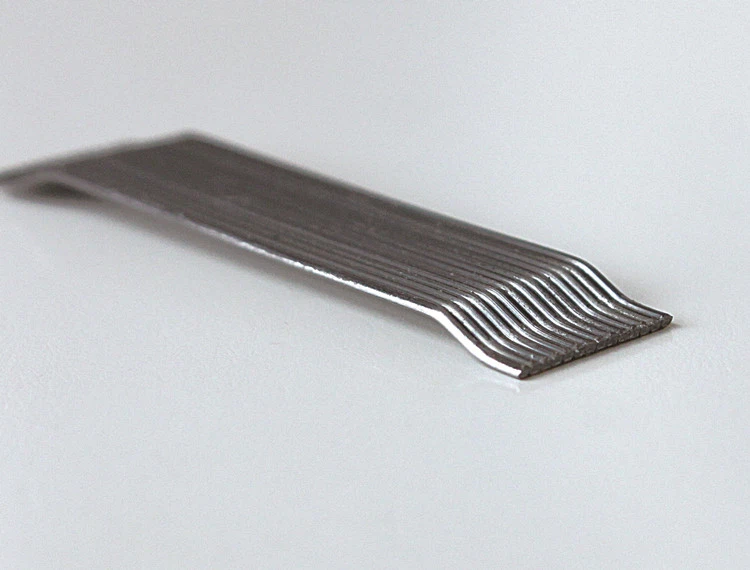
Glued Steel Fiber Specification
|
Item |
Diameter (mm) |
Length (mm) |
Aspect ratio (L/D) |
Tensile strength (MPa) |
|
G50/25BN |
0.5 |
25 |
50 |
≥ 1100 |
|
G60/30BN |
0.5 |
30 |
60 |
≥ 1100 |
|
G70/35BN |
0.5 |
35 |
70 |
≥ 1100 |
|
G70/35BN |
0.6 |
25 |
42 |
≥ 1100 |
|
G50/30BN |
0.6 |
30 |
50 |
≥ 1100 |
|
G58/35BN |
0.6 |
35 |
58 |
≥ 1100 |
|
G40/30BN |
0.75 |
30 |
40 |
≥ 1100 |
|
G47/35BN |
0.75 |
35 |
47 |
≥ 1100 |
|
G80/30BN |
0.75 |
60 |
80 |
≥ 1100 |
|
G38/30BN |
0.8 |
30 |
38 |
≥ 1100 |
|
G44/35BN |
0.8 |
35 |
44 |
≥ 1100 |
|
G75/60BN |
0.8 |
60 |
75 |
≥ 1100 |
|
G56/50BN |
0.9 |
50 |
56 |
≥ 1100 |
|
G67/60BN |
0.9 |
60 |
67 |
≥ 1100 |
|
G50/50BN |
1.0 |
50 |
50 |
≥ 1100 |
|
G60/60BN |
1.0 |
60 |
60 |
≥ 1100 |
There are several types of glued steel fibers available in the market, each with its own unique features and applications. Here are some of the most common types
Glued Hooked-End Steel Fiber
This type of glued steel fiber is made from low-carbon steel and features hooked ends that provide excellent bond strength with the surrounding concrete. The hooks prevent the fibers from pulling out, enhancing the overall toughness and crack resistance of the concrete. Glued hooked-end steel fibers are commonly used in industrial floors, tunnel linings, and shotcrete applications.
Glued Straight Steel Fiber
Glued straight steel fibers are manufactured from high-strength steel wires and offer exceptional tensile strength and ductility to the concrete. These fibers are typically used in applications where the main concern is crack control and enhanced load-carrying capacity. Common applications include precast elements, overlays, and composite metal decks.
Glued Wave Steel Fiber
Glued wave steel fibers are designed with a unique wave shape, which provides improved bonding with the concrete matrix. This type of fiber offers excellent crack control, impact resistance, and energy absorption capacity. Glued wave steel fibers are commonly used in concrete pavements, industrial flooring, and precast elements.
Glued Micro Steel Fiber
Glued micro steel fibers are extremely fine fibers that are used in high-performance concrete applications. These fibers enhance the concrete's durability, resistance to cracking, and resistance to shrinkage. Glued micro steel fibers are commonly used in airports, highways, and other infrastructure projects where long-term performance is crucial.
Glued Blended Steel Fiber
As the name suggests, glued blended steel fibers are a combination of various steel fiber types, such as hooked-end, straight, and wave fibers. This blended approach offers a balance of different properties, making it suitable for a wide range of applications. Glued blended steel fibers are used in industrial flooring, bridge decks, and precast elements.
The Glued Steel Fibres Market size is expected to develop revenue and exponential market growth at a remarkable CAGR during the forecast period from 2023–2030. The growth of the market can be attributed to the increasing demand for Glued Steel Fibres owning to the Military Industry, Construction Industry, Others Applications across the global level. The report provides insights regarding the lucrative opportunities in the Glued Steel Fibres Market at the country level. The report also includes a precise cost, segments, trends, region, and commercial development of the major key players globally for the projected period.
The Glued Steel Fibres Market report represents gathered information about a market within an industry or various industries. The Glued Steel Fibres Market report includes analysis in terms of both quantitative and qualitative data with a forecast period of the report extending from 2023 to 2030. The report is prepared to take into consideration various factors such as Product pricing, Product or services penetration at both country and regional levels, Country GDP, market dynamics of parent market & child markets, End application industries, major players, consumer buying behavior, economic, political, social scenarios of countries, many others. The report is divided into various segments to offer a detailed analysis of the market from every possible aspect of the market.
The overall report focuses on primary sections such as – market segments, market outlook, competitive landscape, and company profiles. The segments provide details in terms of various perspectives such as end-use industry, product or service type, and any other relevant segmentation as per the market' s current scenario which includes various aspects to perform further marketing activity. The market outlook section gives a detailed analysis of market evolution, growth drivers, restraints, opportunities, and challenges, Porter' s 5 Force' s Framework, macroeconomic analysis, value chain analysis and pricing analysis that directly shape the market at present and over the forecasted period. The drivers and restraints cover the internal factors of the market whereas opportunities and challenges are the external factors that are affecting the market. The market outlook section also gives an indication of the trends influencing new business development and investment opportunities.
Type Of Application
The type of application that you want to use the glued steel fibers is an essential consideration when selecting the product's type. The fibers' properties can vary depending on the intended use, such as precast, shotcrete, or cast-in-place. For example, shotcrete requires a high aspect ratio and a high tensile strength, making hooked-end fibers more suitable.
Aspect Ratio
The aspect ratio is the ratio of the fiber's length to its diameter. It is an important factor to consider because it affects the fiber's ability to transfer stress from the concrete matrix to the fiber. The higher the aspect ratio, the better the fiber's performance in concrete. Usually, fibers with an aspect ratio between 30 and 80 are used in concrete. However, for shotcrete, aspect ratios should be higher, between 50 and 100.

Tensile Strength
The glued steel fiber's tensile strength is its ability to resist deformation when subjected to stress. The higher the tensile strength, the better the fiber's properties. The product you choose should have an appropriate tensile strength that matches the application requirements.
Hooked-end Fibers Or Straight Fibers
Glued steel fibers also come in two types: hooked-end fibers and straight fibers. Hooked-end fibers provide better anchoring within the concrete and are more suitable for applications that require higher tensile strength. On the other hand, straight fibers are more cost-effective and have a smoother finish.
Dosage
The dosage of glued steel fibers is another crucial factor to consider when selecting the product. The dosage is the amount of fiber added to the concrete per unit volume. The dosage should meet the application requirements and be based on the concrete mix design and other variables.
Glued hooked end steel fibers are a popular reinforcement material that is used in a variety of applications. Here are some common applications of glued hooked end steel fiber:
Industrial flooring
Glued hooked end steel fibers are often used in the construction of industrial floorings, such as warehouses, factories, and distribution centers. The fibers help to improve the durability and load-bearing capacity of the concrete, making it more resistant to heavy machinery and foot traffic.
Shotcrete
Shotcrete is a method of applying concrete through a high-pressure hose and glued hooked end steel fibers are often added to the mix to improve its strength and toughness. Shotcrete is commonly used for tunnel linings, retaining walls, and other structures where traditional concrete pouring methods may not be feasible.
Precast concrete
Glued hooked end steel fibers can be added to precast concrete elements such as walls, beams, and columns to improve their strength and durability. This can help to reduce the risk of cracking and other damage during transportation and installation.
Concrete overlays
Concrete overlays are used to repair and resurface damaged concrete surfaces, and glued hooked end steel fibers can be added to the mix to improve the performance and longevity of the overlay.
Bridge decks
Glued hooked end steel fibers are often used in the construction of bridge decks, where they can help to improve durability and resistance to cracking and fatigue.
Choosing The Steel Fiber
The first step in the process is selecting the appropriate steel fiber for the intended use. Steel fibers are available in various shapes, sizes, and materials, depending on the requirements of the project.
Surface Treatment
To ensure proper bonding between the steel fiber and the concrete matrix, the steel fibers are surface treated. This process involves cleaning the steel fibers and coating them with a special adhesive.
Applying The Adhesive
The steel fibers are then coated with an adhesive to ensure that they bond well to the concrete. The adhesive is typically a polymer-based material that is applied uniformly to the fibers.
Drying The Fibers
After the adhesive is applied, the steel fibers are allowed to dry. This process can take several hours, depending on the type of adhesive used.
Mixing The Fibers With Concrete
Once the steel fibers are dry, they are mixed with the concrete. This process typically involves mixing the fibers with the concrete at a specific ratio to achieve the desired strength and performance.
Pouring And Finishing The Concrete
The final step in the process of glued steel fiber is pouring and finishing the concrete. The concrete is typically poured into molds or forms and then finished to achieve the desired surface texture and smoothness.
Zhejiang Boen Metal Products Co., Ltd.
Established in 2009, factory area 17000m2.


As one of the most professional glued steel fiber manufacturers and suppliers in China, we're featured by quality products and competitive price. Please rest assured to buy bulk glued steel fiber from our factory.
glued steel fibers for construction, collated steel fiber, high strength glued of steel fibers(0/10)
